
Mar
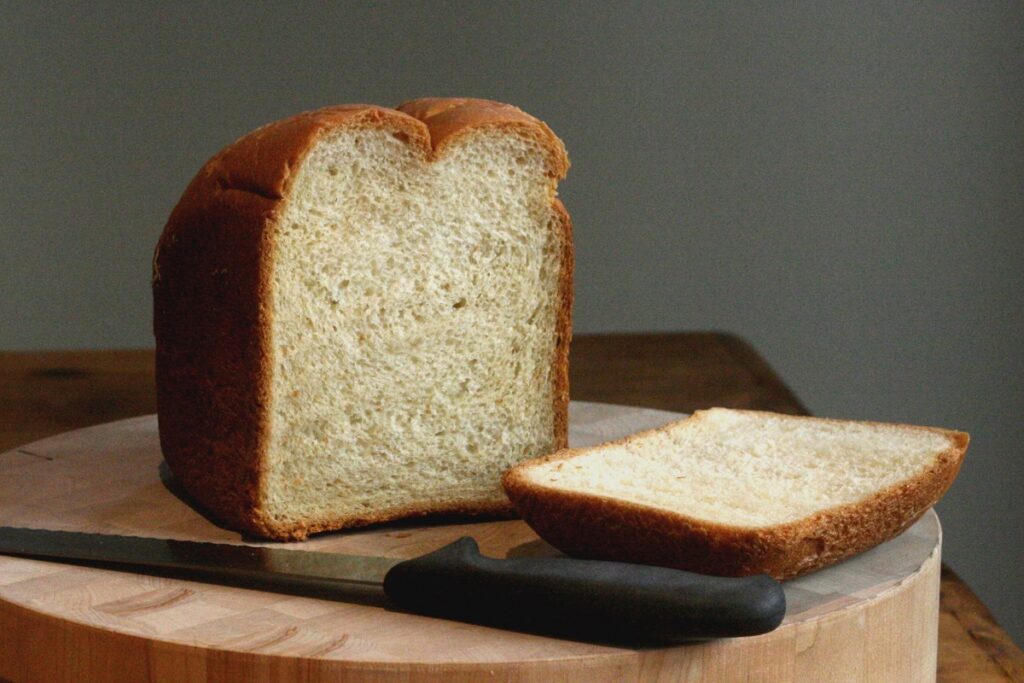
Photo: A bread machine loaf by kae71463, CC BY 2.0. From the Real Bread Campaign website.
As Real Bread Campaign co-ordinator Chris Young has said: “Many people enjoy the therapeutic process of mixing, kneading and shaping dough by hand, but we know this isn’t for everyone. Adopting one of these under-appreciated gadgets is a very affordable and accessible way for more people to take control of the food they do, and the additives they don’t, eat and feed to their families.”
The Real Bread Campaign has recipes for bread machine Real Bread from our Chair (and RBC co-founder) Andrew Whitley, and for bread machine sourdough from Chris Young.
A side note: did you know that almost all dried instant yeast on the market contains additives including emulsifiers? Most people make their own bread in part to avoid these chemicals, so the RBC also has a list of the few that don’t.
Scotland The Bread flour can be used in a bread machine subject to the following considerations:
- Our flour is milled from historic varieties that pre-date the attempt to breed British grains to be like North American ones, i.e. with a tough, elastic gluten that (provided it is well kneaded) can expand to hold a lot of air, giving a light and vertically-risen loaf. Our flour has a naturally softer gluten that is more extensible than elastic.
- Scotland The Bread flour does not require energetic kneading. The gluten develops quickly and with a minimum of working, meaning that people who may experience joint pain during extended kneading can consider working our dough briefly and gently, for perhaps a minute or two, which is all it needs to start the process of gluten formation. Time will do the rest, helped by the odd very brief fold of the dough.
- If possible, choose a program on your bread machine that mixes the dough for as short a time as possible.
- Scotland The Bread flour may absorb more water than a conventional flour (or bread machine mix), so it may be necessary to add a bit more than the recipe suggests. Some experimentation may be necessary.
- Avoid ‘fast-acting’ yeasts if possible because they are so vigorous that, at the quantities recommended for many bread machine, they can blow the dough up too quickly and burst the gluten bubbles prematurely. Try either half the recommended quantity of ‘fast-acting’ yeast, or switch to traditional ‘active dried yeast’ which works a bit more slowly.
- Slower, cooler fermentation, if your machine can be set to achieve this, brings out the flavour and nutritional quality of Scotland The Bread flour – and aids the keeping quality of the bread.
- If you already use a bread machine and have a favourite programme or recipe, try substituting 50% Scotland The Bread flour to start with to see how it performs. If all is well, you can increase the percentage until you achieve the optimum balance of loaf volume, flavour, nutrient density, cutability and ’shelf life’.
- As bread machines come in many specifications and their inner workings are not always evident from the programme descriptions, you could avoid any uncertainty by using your bread machine simply to mix the dough – as if you were making rolls or pizza – and to shape it, prove it and bake it separately.
- Remember that flour like Scotland The Bread’s with a soft extensible gluten character lends itself to flatbreads (pizza, focaccia, baguettes etc) more than to vertically bold shapes.
